Friday, July 30, 2021

Oporto & Hippocratic Past: Do No Harm!


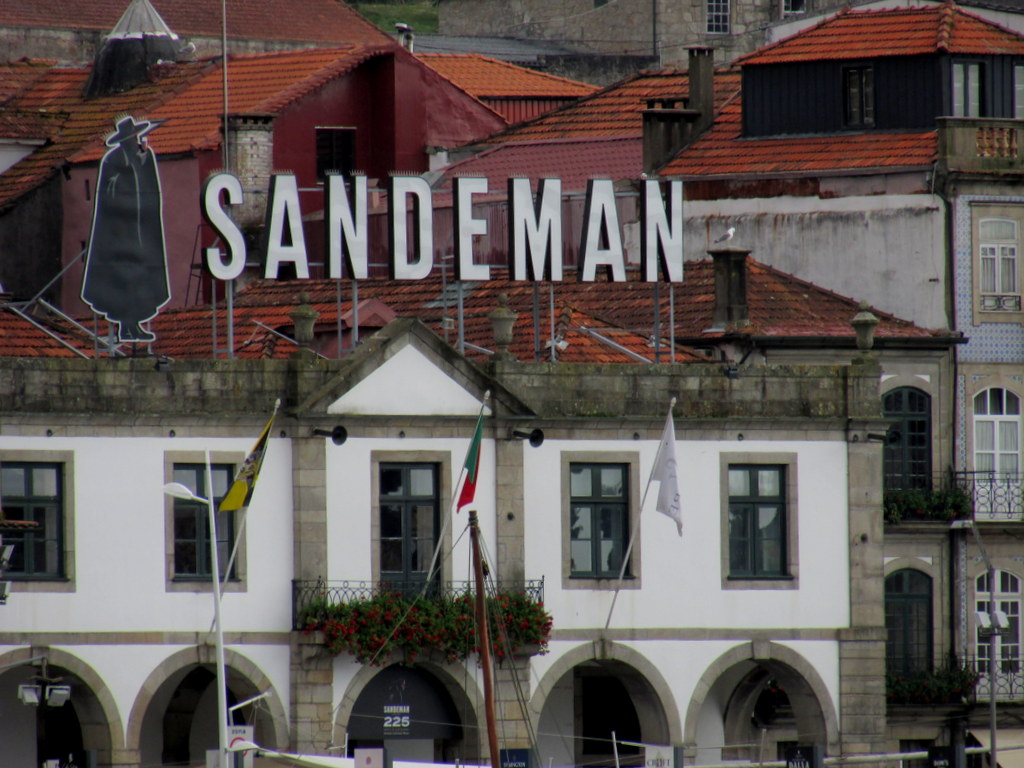
We were in Oporto in 2017 and in this beautiful place famous for its Port, I stumbled upon a museum that reminded me of our Hippocratic Past. 


It was the medical museum right in the middle of Oporto. 


The following is extracted from The Cockroach CatcherChapter 30  Religious Fanaticism


I
n our work we have some unusual referrals now and again and sometimes they require unusual handling.
         I had an urgent call to deal with a serious suicide attempt at a well known local boarding school.
         No, the child was not admitted to hospital as would be the usual practice, but was kept at the infirmary at the school instead. I arranged to make an immediate visit to see her there.  She was only twelve.
         This was one of the few Church Schools that catered for able children who could not afford expensive private schools. Part of the intake were bright children of church personnel from all over the country. It still had rather medieval costumes for uniform and you could spot the school children a mile away with their long dark blue gowns. Boys and girls had the same outer costumes, but different belts and buckles according to the pupil's year group.
         The school had the feel of a monastery and was quite overpowering as you entered. Individual boarding houses lined up neatly. It read: “We mean business. You are here to learn.”
         The infirmary was even more imposing. It was part of the main block. The main door as you could imagine was at least 15 ft tall and weighed a ton.  The old wrought iron handle had seen a few centuries of use and yet its hinges were well oiled so that when the matron greeted me, she had no problem opening it and it did not produce the squeak I expected.
         The dark double height ceiling made darker by a few centuries of candle and oil smoke would make you think twice before falling ill.  I was led through a couple of archways before I reached the infirmary. There were glass cabinets with all kinds of ancient medical equipments. I was once fortunate enough to archive by photo the small museum at our psychiatric hospital and had since been interested in ancient medical tools. This place seemed to have more and one wondered what they used those tools for. Then I realised that this was a hospital before it became a school, and during the war it was a military hospital.
         At least I am in good company today, I thought, and I had better not let down my colleagues from the Hippocratic past.
         It was early March and spring had not quite arrived in southern England that year. There was not much light coming through the small oval windows. Matron seemed to have read my mind.
         “This was not in fact a proper hospital ward as the main hospital buildings are now the dormitory. This was the staff chapel, but as we all now use the main chapel, it seems such a good idea to turn this into an infirmary. Very good for migraines and headaches and that is normally what we deal with.” Matron said.
         I thought - mmmmm, neither condition can be confirmed by any medical investigation.
         Still it was quite a big room and with the neatly made beds and their white sheets, was speaking loudly – this is an infirmary; you are here to be ill and hopefully to recover.
         Ruth was sitting in one of the middle beds and with her nurse.
         “We have kept a nurse with her since last night, doctor.” Matron assured me.
         There we were, a rather petite looking girl in her hospital outfit sitting on the rather high bed trying to read.  She had a small face and as I approached, slipped off the bed and stood to attention. That said a lot about what kind of school this was. She was reading a French novel but I could not really tell which one it was. She looked cheerful, certainly too cheerful for someone who had tried to get to the other side less than twelve hours ago.
         It was a job to persuade matron to let me speak to Ruth on my own. When she realised that I meant what I said she sent the nurse to sit outside the door just in case and still hoped that I would let her keep it ajar an inch or so. She eventually agreed to have it closed but the nurse would just be outside.
         Ruth herself was not too bothered and I suspected that when you lived in a big dormitory, privacy was not a big concern.
         It was not my style to jump straight to what happened. This disappointed her a bit.
         “Don’t you want to know what happened?” she asked.
         But she agreed to do it my way and in fact it was a better idea, she later agreed.  She thought I was going to ask about the night before and then send her to a mental institution.
         Matron had informed the parents of my visit and mother, who was a social worker, was driving up from the coast and hoped to meet me within the hour.
         There is a very simple rule when we assess attempted suicide. We have to decide if this is the usual or the unusual.
         The usual – probably late teenage, made up to look twenty one, argument with boyfriend, got drunk and took eighteen Paracetamol or whatever was handy including the rest of the month’s pill. Most survived but now and again they were unlucky, were found too late and died a rather painful death. I was lucky – I never had to deal with those. I heard of one though, but she was dead when found. She left mum a note but mum was out with her boyfriend all night and the next day she came home to find a dead girl. Luckily these cases were rare and for that we had to thank our lucky stars. The virtual disappearance of barbiturates and tricyclic antidepressants meant that we had to deal with fewer accidental deaths, though Paracetamol remained the most potent killing agent.
         This girl was not like the usual. She tried to hang herself with the very belt with which she was meant to tie her cloak. Luckily for her the light to which she tied the belt did not hold her weight and she fell to her bed and tripped out the mains. Most of the other girls were asleep but her best friend saw her. She was too scared to say anything at first but now she could not stop crying and had been kept in her own dorm away from my patient’s influence.
         She was one of the star pupils of her year. Her father was the chaplain at a church near the coast. She was the only child. She was also a very good swimmer and represented the school in competitions. She was very talkative and despite what happened was quite at ease telling me about herself and her views of life.
         For three nights before going to sleep she heard a voice telling her to hang herself.  The previous night she actually saw a shadow telling her she must do it to keep her parents from harm. She thought it would not matter as her parents were more important.
         I did not think she was making it up. She did try to hang herself.
         What should I do?  Was this the start of a psychotic illness? Did she have a fast growing brain tumour?  If I made the wrong decision, she might end up dead one way or another.
         No, there was no other sign of either a depressive illness or psychosis. Why were the parents not here for something so serious? Why was mother still at work? Why was father not on his way here? Perhaps they did not take this seriously and maybe I should not either.
         This was an otherwise well put together girl, clever, good looking and had a good prospect of achieving well.
         Would this be someone you put on an antidepressant or antipsychotic?  Would I need to send her to a mental institution?
         One of the most important things we learned in medicine is: when in doubt, do nothing.
         To be more precise, do not do anything that is not reversible. What was the rush?
         I had for years an arrangement to admit my patients, if necessary, to our paediatric ward which normally took in tonsils and dental patients. The hot cases were appendicitis, and then there were my patients who did not require psychiatric inpatient treatment; they had mostly been anorectic patients who, incidentally, had done well over the years. They were often there without other anorectics and that was perhaps one of the reasons they did well.
         A number of O/Ds (overdoses) used to go through the paediatricians, and I would be consulted before any of them could be discharged – a sort of safety valve approach. There were no seriously ill patients. The nurses were a fairly stable group.  It was an ideal place for mothers returning to a nursing career. Over the years, they had got to like my special group of patients, including infants with a sleep problem.
         That would be the ideal place for Ruth. It was a modern hospital. And we could observe her. Like they say, something is going to give.
         Mother turned up. She did look like a social worker. She explained that if this was a hysterical gesture she did not want the girl to think that she could do something like this and get her attention.
         But that was not how I saw it. No, this was no textbook case.
         It was very interesting talking to mother. Half the time I was talking to a colleague and the other half to a very frustrated modern woman married to a very strictly religious man.
         She and her husband were at college together. They were idealists. They were CND members. They marched against this war and that and eventually he studied theology and she, social work. Ruth was a perfect baby, bright and cheerful. She was their only child. She obeyed all rules and she was diligent.  She was every mother’s dream. She was cute, charming, clever and full of life, never demanding in any way and had always been the top achiever in everything she did, academic or sport. She had quite a following in school and what happened came as a shock, and a serious shock to a boarding school.
         A religious boarding school.
         Such behaviour could be infectious and more so when a natural leader did it.
         This is particularly true of psychiatric patients and more so adolescents in an institution. Some years ago a colleague’s two daughters sadly committed suicide one after another in a boarding school.
         I had to come up with a solution.
         A friend once said to me, “You often have to do certain things when a patient is referred to you, not because it is necessary for the patient, but because it is important for the referrer, the parents or the people around the patient.”
         I could not leave Ruth in the boarding school. I could not send her to a mental institution. So I had to admit her to the paediatric ward.
         Mother agreed. Matron was most relieved. Ruth of course would not object. I felt happier getting her out of that rather imposing place.
         An MRI did not reveal any lurking growth and you would be surprised how many parents would have been disappointed with that. Luckily not this mother.
         Ruth became extremely helpful on the ward assisting with the younger kids distressed by their ops and she would be patiently reading them stories. Schoolwork was sent in regularly and I did not think she suffered much from being absent.
         Visiting was rather restricted, not by the hospital but by the school for obvious fear of contamination, contamination of the minds of the innocent ones.
         She soon revealed the figure she saw was that of her father. She said she was afraid to tell me before.
         Now I understood the reasons I never once saw father. 
         She told me that over an extended period of time she would be shut in with him in an under-stairway cupboard when he would recount biblical passages of hell and damnation. The idea was to give her a real taste of hell. 
         “Why was it necessary?” I wondered to myself, “Why do this to a girl who by all standards is perfect?”
         I wish I knew and I wish I had made up the story. But real life could be very strange indeed.
         With her permission, I brought mother in and she started crying when Ruth said, “I told him.”
         Mother assured me later that she did not think there was any sex abuse but it did cross her mind that all the dramatic teaching of Revelation might have something to do with her daughter’s hearing voices and especially those of her father.
         At that time I had just come back from Peru, with images of Juanita[1] still fresh in my mind.  The tribal rituals of virgin sacrifice in the Andes, visions and religious fanaticism suddenly took on a new meaning.
         She respected her father and what he said had to be done, even if it was hallucination.  Sacrifice would be nothing and if she was to go to heaven anyway, she would have avoided the torture of hell.
         I continued to see her and her mother. We seldom talked about religious matters, but more about studies, literature, sport and current affairs. Father never came to any of the appointments.  I did not force him to come to see me. I believe it was sometimes more revealing to let things unfold. Often things that did not happen told a story too.
         There were two more sightings of the devil but she was not distressed.
         I never pronounced any judgment on the origin of her symptoms and school soon gave up asking me. There was an unspoken understanding with Ruth and mother and I preferred to leave it that way. I felt that my job was not to destroy but to help recovery.
         Was it ethical? Could I have missed what is called Satanic Abuse? We do know what happened to some of those who were so sure of their views of abuse. How much harm was caused? How many children were wrongfully taken away never to return to their parents?
         Of course doctors could be wrong and of course my views might change in time but for now things were working out. 
         Bad parents are generally easier to deal with. It is easier for children to know from early on that they are better off not taking any notice of them and they will, at least the resilient ones will, survive. Many children of psychotic parents become independent and tough from an early age. “Good parents”, on the other hand, are more difficult to handle and if they already have a position in society, what are the poor children supposed to do?
         Ruth had been sheltered in her upbringing. She was not streetwise and staying in a highly religious institution, she did not have the chance to mix with any rebellious children.
         As a first born, she followed rules and orders.
         I continued to see them.  Later, without any direct instruction by me, mother worked out that it would be better to move her from her current school to another church school. This one was less austere and the focus was more on education than on religion. She blossomed and now as she was not boarding, she began to go out and meet boys. Soon enough she was dating a boy. With mother’s help they kept this from father whom I still had not met. She achieved some exceptional GCSE results, moved on to a state sixth form college which her now boyfriend also attended. He wanted to be an engineer and she was aiming for languages.
         She went on the pill and father still had no idea she had this boyfriend.
         Her A Level results were straight A's and she got her place at a top university. She came to see me during the Christmas break.  She settled in very well and was enjoying her course.  I did not ask her about her hallucinations. Sometimes we need to know what not to say.
         Mother left father as soon as Ruth got to university and continued to work as a social worker. Father was transferred to the north.
        
         Perhaps I should have raised alarms about father.
         Perhaps.
         I was lucky she came to no harm.
         Sometimes one may not be so lucky.


[1] Juanita (also known as "The Ice Maiden") was discovered on the top of Mount Ampato near Arequipa, Peru, on September 8, 1995 by Johan Reinhard. She was 12 to 14 years old when she was sacrificed and is believed to have died about 500 years ago.
    Although she was frozen in the frigid temperatures on Mount Ampato, her body was discovered because a nearby volcano had caused Ampato's snowcap to melt. The undisturbed site of her burial included many items left as offerings to the gods. Two other children's bodies were discovered near her.

May 30, 2016 ... In The Cockroach Catcher, in the opening chapter I recalled an Anorexia Nervosa patient that has been “dumped” by her Private Health Insurer.

Jun 14, 2016 ... ... of childhood psychological problems. Indeed it was a sad day when the unit closed. From The Cockroach Catcher: Chapter 48 The Last Cook ...


Dec 1, 2015 ... The following is extracted from The Cockroach Catcher: Chapter 29 The Power of Prayers. Some time in early February of 1978 I was called to ...
Apr 25, 2014 ... ... then the Tate also rejected Picasso………” The Tate now of course has several Mondrian works. Now you can read the whole chapter here: ...

Jun 29, 2011 ... In The Cockroach Catcher I got my Anorectic patient to play the cello that was banned by the “weight gain contract”: Jane got on well with me.

Dec 1, 2015 ... The following is extracted from The Cockroach Catcher: Chapter 29 The Power of Prayers. Some time in early February of 1978 I was called to ...


Jul 20, 2016 ... The following is an extract from The Cockroach Catcher: “Get him to the hospital. Whatever it is he is not ours, not this time. But wait. Has he ...

Wednesday, July 21, 2021

Music & Knowledge: Mozart & Brain!

© 2005 Am Ang Zhang
As the cock crowed, the grandfather left the house on his half mile walk to the little park by the river for his morning Tai Chi with a group of seniors. He was in fact the leader of the group and it fell upon him, a young looking 83 year old to go through the sequence of Tai Chi moves that had been passed down by his grandfather and others before him. His wife sometimes accompanied him but today she had to baby sit the grand-children as their parents were on an early shift. When they finished they sat around for some social chat and drank green tea from their thermal flasks. He walked home refreshed from the morning’s exercise and social gossips. As he neared home he could hear his grand-daughter practicing the piano. What lovely Mozart! He stepped into the house to find his grandson busy at a Nintendo game.

“Why aren’t you practicing your violin? If you just play computer games, your brain will turn into water.”

His grandson shut down the Nintendo, “Grandma, you should try it some time. It will be good for your brain.”
 “I am too old for it. My brain is all water anyway, according to grandpa!” She just remembered that she had to take her Ginkgo capsules.


The grandson played some scales on the violin and then the Vivaldi A minor. From memory, as that was how he was trained.

At breakfast, the young children listened to Grandpa reciting ancient classical Chinese poems - a long standing family tradition. Soon the grand-children left for school.
Grandma now cracked some walnuts while grandpa got ready to go to the market to see what fresh fish he could buy that day. The walnut was to go with their home reared free range chicken. They grew their own vegetables too.

Later that day they would be having a good game of Mahjong with a retired couple.

Much of what they did would help to maintain their brain fitness.

Ginkgo biloba with its romantic botanical history is no longer the Dementia buster it promised to be. (Those who know of the village in Japan where there are loads of Ginkgo trees could have told you that. The village has the highest Alzheimer rates in Japan.)

I was reminded of Woody Allen’s film, Radio Days, where the young Allen (who else) was brought before the Rabbi by his mother for his advice because Allen was hooked onto the radio. The Rabbi’s skepticism was perhaps not that dissimilar to ours nowadays about iPhones, computer games and brain exercises. Indeed the young Allen should be concentrating on his upcoming Bar Mitzvah and the Torah memorizing.

The Old views on Brain.

When I was training in London in the 70s, I spent some time at Queen Square. Those in the know will recognize it as the place for neurology this side of the Atlantic. It was drilled into us then that sadly we were given a number of brain cells when we were born and it was all downhill from then on or something to that effect. It was well known that neurologists were great diagnosticians but for most neurological conditions, not much could be done. How depressing indeed. Even as recently as four weeks ago, I heard a young doctor told his father that there was nothing he could do with his brain cells. One is given so many at birth and no more can be expected. Lord Brain (1895-1966) would have been so proud.

Yet it was also London that shook the world with new discoveries about the brain, and the study was on the most unlikely group of people: Taxi drivers. Their “KNOWLEDGE” was the basis of our knowledge on brain plasticity today. The “KNOWLEDGE” is a term officially used to describe the test the Taxi Drivers had to take to get the licence to drive Taxis in London. Streets in London have evolved over time and are not on any grid system at all. Early postmortem examinations led some pathologists to note the small size of the Taxi drivers’ frontal lobes. Yet actual weight measurement showed that size was all relative. It was the enlarged hippocampal region that created that impression. Later work using modern scanning techniques confirmed the early impressions.

If two to four years of “KNOWLEDGE” acquisition can change the size of the brain in a grown adult, what else could we do?

The rest, as they say, is history.


The book covers the changes to the brains of musicians and medical students. It tells us that just three months of memory work can have noticeable effect on the brain of medical students, and music memory work has similar impact on musicians. I was pleased to learn that Bilingualism helps too. From infancy, I and my siblings were brought up with speaking two Chinese dialects at home.

Will medical schools that have abandoned traditional teachings please bring back Anatomy-the old way?

Mozart & Music
Is the piano China’s answer to the problem that is facing many parents in the west, i.e. ADHD? Could it be a novel substitute for Ritalin and other stimulants? With the advent of unproven modern approaches to education at all levels, very few subjects require memory work. Yet in the last decade or so, memory work has been shown to be beneficial to “brain power”, leading to a whole new approach to neuroplasticity. Learning a musical instrument is one way to give the brain the right amount of training. 

Did the 300,000 or so that took up piano this year in China know a thing or two about brain plasticity? Currently 30 million children are reported to be learning the piano in China.

For now, just as the west is abandoning classical music training as part of the school curriculum, parents in China are paying for their children to have piano lessons. By some reckoning, North America probably consumes 90% of Ritalin and similar stimulants, whereas China is probably consuming 90% of the pianos produced. One factory in the south of China is currently producing 100,000 pianos a day.

As a child psychiatrist, I find the ones on ADHD showed great promise but I doubt if we are ever going to see the end of the stimulants’ hold on the condition in the West. It is interesting to note that Stimulants never took off in China, a country with a fifth of the world’s population. Computer games, on the other hand, have really taken off there.

Bridge and Sudoku were mentioned in passing, along with other favourites like crosswords. There is no mention of Mahjong although in the East it is all the rage, nor the memory work required in some religions. Their gods might know a thing or two about the brain.

Mozart's birthday: 27 January 1756


Sunday, June 20, 2021

The Ring & The Ruling Class: Politics & Human Behaviour

As real life now immitates opera in more ways than one with nothing less than Wagner to match the scale of the deceit and wickedness. I will now reprint from a previous post that has been popular:
By Alan Wagner 01 Apr 2004
Alan Wagner delves into the moral and spiritual core of Richard Wagner's colossal masterwork.
Little in art created by a single mind compares to the sheer size and scope of Richard Wagner's Der Ring des Nibelungen. Only a genius with a hint of madness could have conceived anything this colossal, let alone willed it into completion over twenty-six years of gestation and creation. 

Furthermore, its 18 hours comprising a single music-drama have gripped every generation since its 1876 premiere with incredible power, unleashing a torrent of commentary. In order to so possess both artist and audiences, Wagner's Ring clearly must be more than a simple sword-and-sorcery epic about giants, dwarfs, gods, and heroes.

And it is. Within that immense journey from the dawn of consciousness to the obliteration of an entire cosmic order there is a compelling moral core. However, even though the composer and his audience were unavoidably enmeshed within a Christian European milieu, it is far from your mama's Sunday-school lesson, a long way from the Ten Commandments, those pillars of Western ethics.

Wagner's philosophical convictions underwent similarly significant refashioning. When he began the Ring, he was influenced by Ludwig Feuerbach, whose principal tenet, explicated in The Essence of Christianity, was that man created God, not the other way around. Religion merely reveals truths about mankind's needs, and its most meaningful revelation is that God is love. Therefore, the pathway to salvation, personal and societal, is love.
In early drafts of the Ring, the liaison between Siegfried and Brünnhilde brought about a triumphant ending for Wotan's sovereignty. However, by 1854, when Wagner first read the masterpiece that impacted his thinking ever after,  Arthur Schopenhauer's The World as Will and Representation, he was already disillusioned about the perfectibility of either mankind or civilization. The Buddhist-like pessimism of Schopenhauer set the seal for Wagner, and he slid the metaphysical centre of the Ring from Siegfried's death to where, as he wrote to his friend August Röckel, "Wotan rises to the tragic height of willing his own destruction."

I will try and look at it from the Child Psychiatrist’s perspective.
The dark side of the gods: (it is sometimes easier if one take GODS in the Ring to mean those in POWER. For the characters read here.) In fact, the gods need not work at all, the Nibelungs work almost all the time.

Disrespectful Wotan is hardly revered unanimously, and even he acknowledges higher authorities. Erda knows things he doesn't; his almost bureaucratic dominance derives solely from treaties engraved in runes on his spear, treaties to which he is subservient.
Born liars
Characters lie as it suits them. Events are initiated by Wotan's spurious promise to the Giants to pay them by giving them Freia in exchange for building Valhalla, a promise he knows he cannot keep, as she is the indispensable symbol of love whose golden apples keep the gods alive. His shady ally, Loge, is defined as a double-dealing trickster. Brünnhilde breaks her promise to her father to allow Siegmund to be killed in combat. Mime makes dissembling a veritable life's work, ably carried forward by his nephew, Hagen, in Götterdämmerung. 

Contemptuous
Brünnhilde disobeys Wotan, and his grandson Siegfried destroys his power. Mime, who raises Siegfried from infancy and even makes him toys, is treated with disturbingly cruel contempt by the bumptious hero. Hagen, whom Alberich sired via gold-empowered lust as a tool to retrieve the Ring for him, mutters that if he succeeds he will keep it, not hand it over to his Nibelung father.

Thieving & Misappropriation 
……. misappropriation, of persons or of things, provides much of the plot machinery. First,
 Alberich plunders the Rhinegold, and afterward, theft of others' possessions, including the Ring, motivates action upon action. 
Incest and other illicit sex
The teasing of Alberich by the Rhinemaidens which leads to his abjuring love--love, not lust. The definitive heroine, Brünnhilde, and her Valkyrie sisters are the offspring of an adulterous liaison between Wotan and Erda; Wotan also illegitimately fathers theWälsung twins by a mortal. Sieglinde's infidelity is excoriated by marriage-goddess Fricka, as is her violation with Siegmund of an even more basic taboo, incest. But Wotan defends the twins ("…those two are in love") and, like most audience members moved by the ardent love music, views both transgressions kindly. 
Homicidal
Fafner kills his brother Fasolt, the first victim of Alberich's curse, and we are off to the homicide races. Hunding slays Siegmund, only to be destroyed by Wotan's contempt. Siegfried kills Fafner, the Giant-turned-dragon, and then, after realizing that Mime is trying to poison him, kills him as well. By the time the gods' destiny climaxes, Hagen has murdered both Siegfried and Gunther and is himself drowned by the Rhinemaidens. Eventually Brünnhilde sets Valhalla ablaze as part of her self-immolation upon Siegfried's funeral pyre ("Thus do I hurl the torch into Valhalla's proud-standing stronghold") and all the gods die.
Greed, greed, greed! Finally, "coveting that which is your neighbor's" is pretty much the whole raison d'être for the Ring story, starting with Alberich's desire for the Rhinemaidens, then for the gold they guard. Thereafter everybody seems to want what doesn't belong to him or her: the Ring, a sword, a treasure, someone else's wife, sheer power. 
Yet in spite of Wagner's wholesale abandonment of the Decalogue, the bastion of Western morality, Der Ring des Nibelungen generates explosive ethical and metaphysical impact. He started with the absorption, fusion and reinvention of myriad legendary sources, and layered Schopenhauer's philosophy upon Feuerbach's. In Art and Climate Wagner wrote, "there is no true freedom except that which is common to all mankind... The redeemer is therefore love… starting with sexual love, [it] strides forward through love of children, brothers and friends, to universal love of humanity." The emphasis is his. Yet, some years later he wrote to Mathilde Wesendonck, "I can conceive of only one salvation. It is Rest! ...The stilling of every desire!" 

Wagner once wrote to Röckel, "I have come now to realize how much there is, owing to the whole weight of my poetic aim, that only becomes clear through the music." He later described the discontinuity between his "rationally formed ideas" and "the exquisite unconsciousness of artistic creation… guided by wholly different, infinitely more profound intuition."

Music alone would now convey the message. The last moments of Der Ring des Nibelungen are given entirely to the orchestra: there is too much weight for words. Something greater than the story, richer than all the sources, probably better than Wagner himself knew, is brought to a healing close with a tender statement of a motif heard only once before in the Ring, when Sieglinde learns she is bearing her child of love, Siegfried. It is the motif of Redemption Through Love. 

How wonderful it is to wait this long for the protein to be activated.
In the end, Wagner fashioned a masterwork of such extraordinary strength that it transcends analyses, personalities, philosophers, his own prejudices, and even his total disregard for Judeo-Christian society's standards of ethical behaviour.
Out of the highest art came a truth beyond even his explanation.
 

Stop Press: Lohengrin Review: FT


"Sunday’s audience, which had grumbled and tittered its way through the performance, was stunned into silence. Suddenly, Lohengrin had become a more troubling, more ambivalent work than we all imagined it to be. In place of utopias, it spoke of false dreams, taboos, uncertainty. The rats’ herd-like belief in a better life had been smashed, just as Lohengrin’s quest for unconditional love had failed. No wonder Wagner called Lohengrin his saddest opera."             
Prelude Lohengrin
Other Music Posts: