Tuesday, November 28, 2017

NHS & Gawande: Complications & Being Mortal!

The GMC warned that the safety of hospital patients is being put at risk because inexperienced young doctors are too often being left in charge of A&E and other units.
 We need to look at the way medical liability is covered in Hospitals where indeed all juniors must be covered by a consultant in one way or another. The responsibility would indeed be that of the hospital management and not on the poor Junior Doctor.  The difficulty is the choice between NO doctor or a less experienced one.
 Should the patient be told or should the A&E just be closed? Will management do that or just continue to abuse the poor juniors and blame them when things go wrong. No wonder my friends' children prefer to become lawyers. 


I read Gawande when I was touring Peggy's Cove and posted about his book Complications! Honestly, I did not know Gawande was giving the Reith Lectures. 

Latest Gawande Book:


In one of the most moving passages in the book, Gawande’s father, in hospice, rises from his wheelchair to hear his son lecture at their hometown university. “I was almost overcome just witnessing it,” Gawande writes.

........Gawande offers no manifesto, no checklist, for a better end of life. Rather, he profiles professionals who have challenged the status quo, including Bill Thomas and other geriatricians, palliative-care specialists, and hospice workers. Particularly inspiring are the stories of patients who made hard decisions about balancing their desire to live longer with their desire to live better. These include Gawande’s daughter’s piano teacher, who gave lessons until the last month of her life, and Gawande’s father, also a surgeon, who continued work on a school he founded in India while dying of a spinal tumor.
He’s awed not only by his father’s strength, but by the hospice care that helped the dying man articulate what mattered most to him, and to do it. Gawande thinks, as he watches his proud father climb the bleachers, “Here is what a different kind of care — a different kind of medicine — makes possible.”

What would lawyers say about M + M:

- ‘There is one place, however, where doctors can talk candidly about their mistakes, if not with patients, then at least with one another. It is called the Morbidity and Mortality Conference – or, more simply, M+M – and it takes place, usually once a week, at nearly every academic hospital in the country. This institution survives because laws protecting its proceedings from legal discovery have stayed on the books in most states, despite frequent challenges.’ 

            >>>See also Dr No: We Have No Black Boxes
                                               Abetternhs's Blog  What are we afraid of?

August 27 2014:

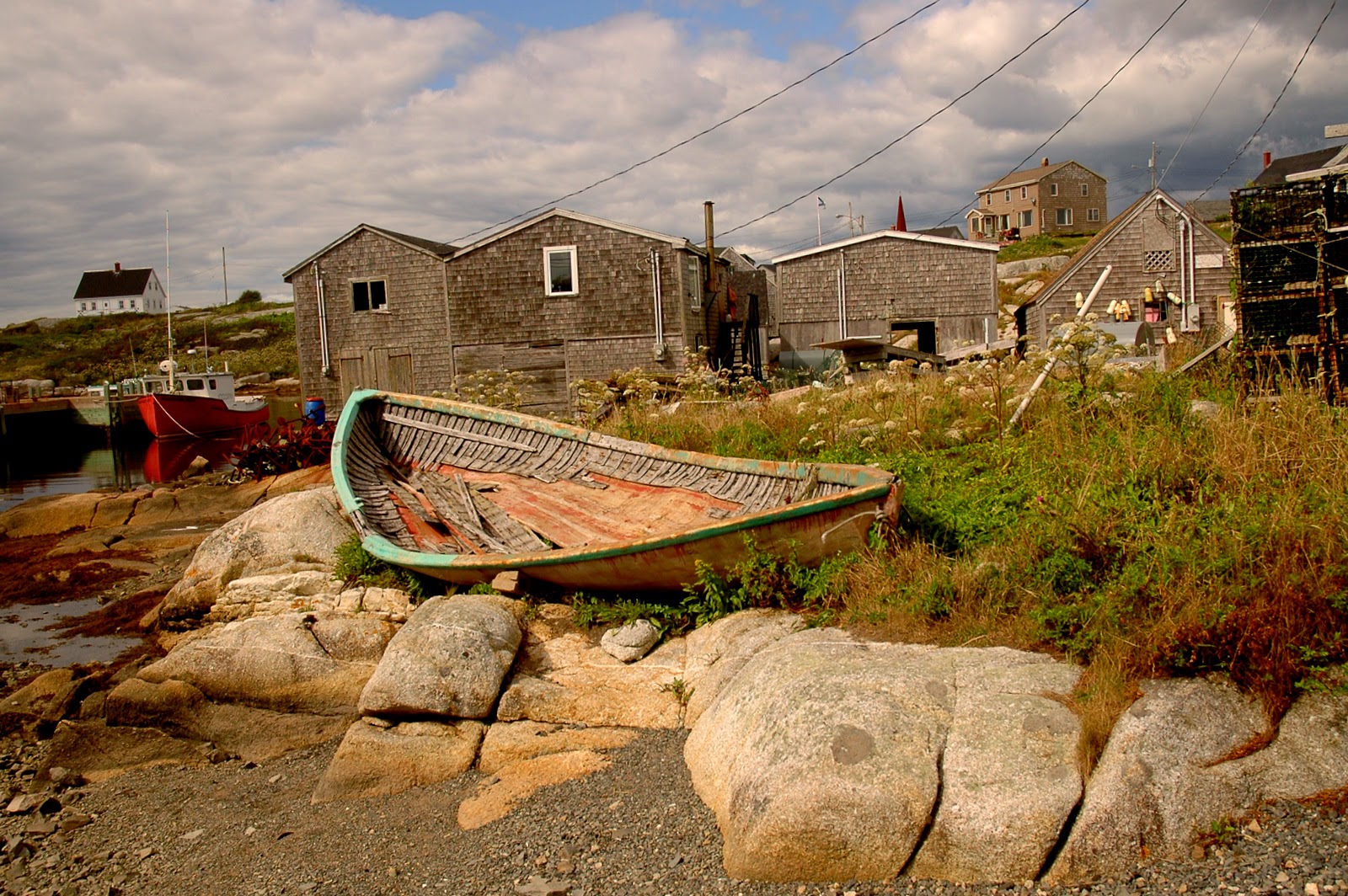
What a charming place: Peggy's Cove of Halifax.

The Cockroach Catcher was finishing reading the book Complications and such charming old landscape reminds him of the old traditional medical training he received and how some doctors still do. Like the author of this book.

The book reads more like a collection of blog posts and in fact it was. Yet it was real and touching. Sometimes it was brunt and brutal. and after all doctors are as human as anyone. Complications includes those doctors themselves may suffer: mental illness and alcoholism as well as the serious cardiac condition of the author's young son.

We, doctors make mistakes and please we must be allowed to sort them out without affecting career or worst, future medical behaviour.

A great book for doctors in particular and when on holiday in a charming place.


All photos©2014 Am Ang Zhang  

 (Metropolitan Books, 288 pages, $24), a collection of 14 pieces, some of which were originally published in The New Yorker and Slate magazines, Gawande uses real-life scenarios – a burned-out doctor who refuses to quit; a terminal patient who opts for risky surgery, with fatal results – to explore the larger ethical issues that underlie medicine. He asks: How much input should a patient have? How can young doctors gain hands-on experience without endangering lives? And how responsible are these doctors for their mistakes?
While “Complications” is full of tragic errors and near misses, the book is not intended to be an expose. Rather, Gawande asserts, it is meant to deepen our understanding of the intricacies of medicine. “In most medical writing, the doctor is either a hero or a villain,” he says, with an edge in his voice. “What I am trying to do is push beyond that and show how ordinary doctors are – and at the same time show that what they can do is extraordinary.”
John Freeman, Copyright (c) 2002 The Denver Post.

Quotes

- ‘There have now been many studies of elite performers – international violinists, chess grand masters, professional ice-skaters, mathematicians, and so forth – and the biggest difference… is the cumulative amount of deliberate practice they’ve had.’

- ‘We have long faced a conflict between the imperative to give patients the best possible care and the need to provide novices with experience. Residencies attempt to mitigate potential harm through supervision and graduated responsibility. And there is reason to think patients actually benefit from teaching. Studies generally find teaching hospitals have better outcomes than non-teaching hospitals. Residents may be amateurs, but having them around checking on patients, asking questions, and keeping faculty on their toes seem to help. But there is still getting around those first few unsteady times a young physician tries to put in a central line, remove a breast cancer, or sew together two segments of a colon… the ward services and clinics where residents have the most responsibility are populated by the poor, the uninsured, the drunk, and the demented… By traditional ethics and public insistence (not to mention court rulings), a patient’s right to the best care possible must trump the objective of training novices. We want perfection without practice. Yet everyone is harmed if no one is trained for the future. So learning is hidden behind drapes and anesthesia and the elisions of language.’ 

- ‘There is one place, however, where doctors can talk candidly about their mistakes, if not with patients, then at least with one another. It is called the Morbidity and Mortality Conference – or, more simply, M+M – and it takes place, usually once a week, at nearly every academic hospital in the country. This institution survives because laws protecting its proceedings from legal discovery have stayed on the books in most states, despite frequent challenges.’ 

Monday, November 27, 2017

Portugal: Woodland Scene!


© 2013 Am Ang Zhang

Others


Can it be that it was all so simple then
Or has time rewritten every line
If we had the chance to do it all again
Tell me - Would we? Could we?
                                                                                                                                                        The Way We Were

The Cockroach Catcher on Amazon Kindle UK, Amazon Kindle US

Thursday, November 23, 2017

NHS & Patagonia: Future is Now!

The Cockroach Catcher came back from Patagonia & found that the future is here: Or is this the last of the NHS we loved just like the Glacier of Patagonia?


The government has learnt that the best way to change our NHS is not by legislation but by enthusiastic leaders that were picked from the best place: Social Media. I will not name names but check it out. Just wondering, once the mobile and England trained juniors all settled in A/NZ. with over 35% Juniors not England trained, would your enthusiasm not die down!!


If you think there is anything new about an integrated NHS, think again. It has been done elsewhere: USA. It is being proposed here in poor areas where ---EM!--- no one wants to be a GP there. So it is about solving a problem and glorifying it as integration. 


Steven Carne in Open Democracy:

And Stevens' PACS (part of Vanguard) are explicitly modelled on San Francisco's Kaiser Permanante’s Accountable Care Organisation model (a latter development of the American HMO model)- despite US concerns about restrictions on which patients can be treated where, long wait times, and still high costs.

I asked a friend in California recently what Kaiser were like. She smiled, “Oh they're great! ‘Til you get sick”. Their focus on prevention and health resilience belies a reluctance to provide full health care that might cost shareholders their profit. Only a top-up payment plan will see you in the real hospital.

“Be the Change You Want to Be...”
We are learning as quickly as we can. But the actions and spin of NHS England and the corporate health, insurance, technology and pharma companies are bewildering and confusing to those of us trying to keep up. Just as we’d begun to get our heads around 2012’s Clinical Commissioning Groups (CCGs) and Commissioning Support Units (CSUs), new NHS boss Simon Stevens’s Five Year Plan ushered in a new layer of jargon and organisational spaghetti – Primary & Acute Care Systems (PACS) and Multidisciplinary or Multispecialty Health Teams (MHTs).

If you read it thinking it made any sort of reasonable sense - then we need to worry.

One of the key weapons being used against the NHS, public and campaigners is the growing misuse of socially minded vocabulary and community development buzzwords.

You’ll all have come across them. Engaged, participatory, resilient, empowering, co-produced, personalised, sustainable….

You’ll find these buzzwords all over the NHS, mixed with a dash of new age personal therapy speak borrowed from the West Coast of America (as we’ll see shortly, there are other imports from the West Coast, too).

……. This dishonest vocabulary aims to fool the public into supporting a host of dubious changes. It relies on a counterpoint image of a desperately archaic NHS, crumbling in an inevitable apocalypse of overweight aging diabetic bed blockers who really should know better and die in their own beds – “Care Closer to Home”.

It glosses over the fact that public funding is being withheld (and wasted on market bureaucracy).


PulseToday @pulsetoday Nine hospitals have been given the green light to provide GP services


The two main new models of care – the GP-led ‘multi-specialty community providers’ (MCPs) and the hospital-led ‘primary and acute care systems’ (PACS) – were included as part of NHS England’s Five-Year Forward View.

It had said that MCPs will be the more common new model, with PACS only established in areas of poor GP recruitment. But nine of the 29 bids approved were from hospital-led organisations.

The new models will employ a mix of primary and secondary care staff to deal with commonly encountered conditions such as diabetes, dementia and mental illness. Some will see some employing ‘social prescribing teams’ who will be able to refer patients to voluntary organisations and local authority services.

(Read the small print: Staff means Staff )

On last count: over 20 million patients would have attended A&E: A rise from 12 million around 10 years ago!

It is not difficult for anyone in the NHS to see how the internal market has continued to fragment and disintegrate our health service.

Attempts to badmouth our Hospitals and their A&E department did not seem to put people off and attendances continue to climb.

NHS:
A trusted Brand? So the Genius is going to pump £500m in, well a small sum compare to £42 billion for RBS.

It is important for SoS/Genius to recognise that the extra money should go directly to hospitals to salary employed staff and not for the likes of Harmoni or Serco to offer a service that punters (sorry, patients) no longer believe in. Did the Genius realise that for OOH and the like there is no control as to who was making the calls. If Serco could fake data.....Well! 

Why not abandon NHS111 all together, prosecute Harmoni & Serco  for gross breach and let Bevan smile.

While you are at it, cancel all UCCs as punters prefer A&E (so do not change the name to ED or worse, ER). Abandon the market system too.

In a Market system, A & Es are run by Hospitals and OOH by CCG/GPs; business rivals so to speak. Hospitals wants to maximize income and CCGs did not want anyone to attend A & E if at all possible.     NHS A & E: Unpredictable, Unruly & Ungainly
  The Genius knows that the GPs are too powerful and will not take back OOH unless there is a lot of money. so the funding to A&E should not be via CCGs although the hospitals have a system of charging CCGs and that was the bit CCGs do not like. Do not wait, Genius as the objections from the GPs will be coming. Employing more GPs does not cure the 24/7 coverage problem at all.

Also, why not cancel CCGs and let hospitals run everything. They are committed to 24/7 service, aren't they?                                                                                                                                                                       -              

‘There is no evidence that GPs as a group are empowered with supernatural abilities to manage large budgets and organisations’

The right configuration?
So what would be the main characteristics of an alternative system based on previous experience? The key features would be:
·                                 Integration of service provision and planning around a defined population and individual patients.
·                                 The best degree of fit possible with social care and other local government services.
·                                 Integration of support services for the defined population, crucially finance and information, to reduce unnecessary overheads.
·                                 Consistency of policy around the key indicators of health of populations, patient outcomes and their experience so comparisons can be made across organisations and time.
There is no right answer to the configuration of health organisations across England and the solution will always be a compromise. However, experience would suggest that London is always a special case and should not influence the best arrangements for the rest of England.
Unnecessary division
For the last 20 odd years, dividing the health service into commissioning (or purchasing) and provision has been the only show in town. First, NHS trusts were divided from health authorities and GP fundholders added to spice the brew. Then primary care trusts were created with practice based commissioning bolted on.
Interestingly, in both cases, GP purchasing/commissioning was run in competition to health authorities/PCTs; rather than to provide synergy. When this ran into difficulties, particularly in restraining the costs of acute trusts, the “world class commissioning” programme was created and PCTs were encouraged to buy in all the best brains in the private sector to smarten up their act. PCTs were even forced to divest themselves of direct management responsibility for community services in case this sullied the purity of their commissioning role.
Now all faith is being placed in clinical commissioning groups and GPs being the magic ingredient that will make commissioning the powerhouse of efficiency and effectiveness in the health service.


The internal market’s billing system is not only costly and bureaucratic, the theory that underpins it is absurd. Why should a bill for the treatment of a patient go out to Oldham or Oxford, when it is not Oldham or Oxford that pays the bill — there is only one person that picks up the tab: the taxpayer, you and me.

…….Instead let them help the NHS do what it does best — treat patients, and do so efficiently and economically without the crucifying expense and ridiculous parody of competition.
                                                 Prof Waxman in an earlier post.


This is not on when you have an internal market system. Through A & E, Hospitals can admit patients without a referral and believe you me, whatever anyone might say the CEOs of FT Hospitals are quite pleased with that.

For CCGs, it is becoming uncontrollable. All Hospital Avoidance tactics will not work. Funding will flow uncontrolled to FT Hospitals.

I have written about this earlier and I will simply reprint them. It is more true now than ever.


Wait: where are the real specialist doctors? And NHS referring to Voluntary Organisations?

The lines at A&E will get longer. They belong to real hospitals!!!

NHS A&E: Unpredictable, Unruly & Ungainly

NHS: Budget 2010-£110 Billion, McKinsey

Monday, November 13, 2017

Pre-Raphaelites: Puerto Rico & A Profound Secret!

Last year we spent a week in Puerto Rico before our Caribbean Cruise thinking it will be food and beach adventure and some Spanish historical sights. Imagine our surprise when we were told that the Ponce Museum of Art is a must see.


Edward Burne-Jones's The Sleep of Arthur in Avalon


Burne-Jones last work was sold at auction when the Tate had the opportunity to buy it for £1,000. It was purchased for the Museo de Arte de Ponce in Puerto Rico by the island's governor and founder of the museum, Don Luis Ferré, in 1963.

In life one should value chance encounters.
One year in June we spent some time with our friends in Dorchester. Somehow the after dinner conversation turned to the Pre-Raphaelitesand our hostess promptly produced a book with an amazing painting on its cover.

In a chance encounter with Andrew Lloyd Webber, Josceline Dimbleby asked him bluntly if she could go and see the portrait he had of her great-aunt, Amy Gaskell.

“Ah, that wonderful dark picture,” Andrew said. “Yes, please come……Well, I think she looks rather like you......”

“Did you know that she died young?” Josceline asked Andrew.

“Of a broken heart.”

She told Andrew that she would try to find out more. This led her to start researching into the life of Amy, her mother May and the famous Pre-Raphaelite painter Edward Burne-Jones and the result was the book A Profound Secret.

I looked at the book cover and thought the portrait reminded me of the Picasso I used for my Anorexia Blog.


Amy Gaskell by Edward Burne-Jones

Leighton House Museum 2004/Andrew Lloyd Webber


                              Girl in a Chemise Picasso

Tate


It is said that as a young man Picasso admired the pre-Raphaelites and Edward Burne-Jones so much that in 1900 he would have gone to London rather than Paris had he had the fare.
“There was a hint in the book that she might well have died of Anorexia!” My hostess said.
It was a fascinating book, like good family biographies are, as long as you accept that it is not going to be as organised as fiction. A good writer helps and Josceline Dimbleby is a well established food and travel writer.

For a psychiatrist, it is especially interesting as he is allowed glimpses into the various personalities, their psychiatric problems and the resulting family dynamics, without the interference of the usual psychiatric labelling or coding. Unfortunately self medicating with alcohol, opium and other fancy substances was rife in that era and the result could often be tragic.
Indeed Josceline thought at one point in the book that Amy might have suffered from Anorexia although it was not a known condition at the time. She left it till the end of the book to let us into the final secret. You will have to find out for yourself.


Without the effect of drugs that would double the bodyweight, we have in the end one of the most beautiful portraits of the Pre-Raphaelites. Burne-Jones’ life is of course another psychiatric book: his mother died when he was six days old and many felt that all his life he was searching for the perfect mother he so missed. It is indeed ironical that the art world has been much enriched by what was essentially untreated bereavement.
Psychiatry may need to look again at what we have been doing, as we do not seem to have found another Burne-Jones.

Reference: "There had been a considerable vogue in Barcelona for the Pre-Raphaelites and the young Andalusian had been an admirer in particular of the white-skinned maidens of Burne-Jones, whom he had seen in reproduction."
........"Picasso assured me, when he was staying in London in 1950, that for him his [1900] trip to Paris was merely a halt on a journey that would take him further north to London. He had conceived a great admiration for England and . . . some English painters, especially Burne-Jones." 
                                                   Roland Penrose: Life and Work of Picasso.


Other References:


Related Posts:

Friday, November 10, 2017

In Flanders fields...........


© Am Ang Zhang 2016

In Flanders fields the poppies blow
Between the crosses, 
row on row,
That mark our place; 
and in the sky
The larks, still bravely singing, fly
Scarce heard amid the guns below.